
Have you ever found yourself logically “knowing” that you are safe, yet your body and mind continue to react as if you are in immediate danger?
As the Founder and Clinical Director of TWCC, LLC, I have spent over 23 years sitting across from individuals—from those in high-pressure corporate roles to children in play therapy—who all share a single, frustrating experience: they feel stuck.
In my early years working in community mental health with complex trauma and schizophrenia, I learned that healing isn’t about “fixing” a person. It is about identifying the barriers carried from our past so we can honor our authentic selves.
If you are fighting a losing battle with your own mind, you aren’t “broken”; you are simply at a stuck point in your story that needs to be unpacked in a safe, compassionate space.
The Bottom Line
- What it is: Cognitive Behavioral Therapy (CBT) is a goal-oriented therapeutic modality that modifies interconnected patterns of thoughts, feelings, and behaviors.
- Our approach: Under my clinical supervision, our team enhances standard CBT by integrating Narrative Therapy and Somatic Grounding, allowing Missouri and Kansas clients to transform “stuck” mental loops into active healing.
- Why it works: By pairing CBT with somatic techniques, we settle physiological triggers first, ensuring that cognitive changes are sustainable and rooted in a felt sense of security.
Beyond “Positive Thinking”: What is CBT at TWCC, LLC?
CBT is a sophisticated, neuroscientific framework that I have utilized throughout my career to help clients move toward joy and authenticity. Our thoughts influence our feelings, which then dictate our behaviors.
When one part of this triangle becomes distorted, the entire system feels the weight of that imbalance. At TWCC, LLC, we view CBT as a Mosaic of integration—a vision I pioneered to ensure we treat the whole person, not just the symptom.
We don’t just want to change your thoughts; we want to help you unpack the “baggage” that prevents you from connecting with those who support your growth.
The “Stuck Loop”: How Narrative Stuck Points Impact Your Mental Health
Why do certain thoughts—like “I’m not enough”—feel so permanent? We call these Narrative Stuck Points.
These are the places where your life story has encountered a trauma or a core belief that stopped the flow of growth. While many believe these loops are just “bad habits,” my clinical experience shows they are often deeply ingrained defense mechanisms.
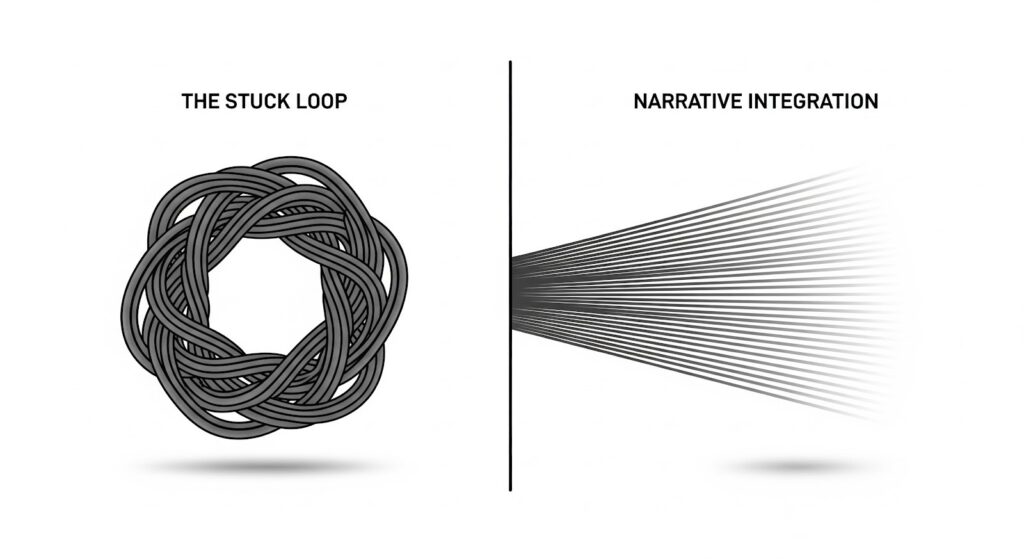
Our “Integrative Team Treatment” uses CBT as a surgical tool for the mind to:
- Identify the “automatic thoughts” and past barriers triggering your distress.
- Audit the evidence for and against these thoughts with the clinical precision I’ve trained our staff to maintain.
- Reframe your perspective into a balanced, accurate narrative that allows for movement and authentic joy.
If these loops sound familiar, the first step is sharing your story with a counselor who understands the science of the “stuck” feeling. You can reach out to my Wellness Team here to begin.
The Somatic Bridge: Why Logic Alone Isn’t Always Enough to Heal
You cannot reframe a thought if your Nervous System is in a state of “Fight, Flight, or Freeze.”
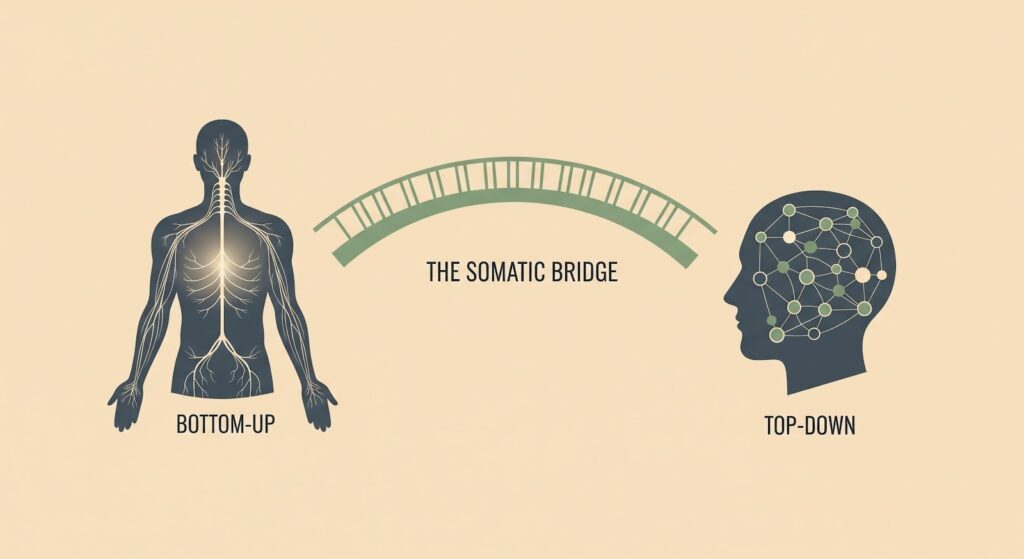
This is the most common reason traditional talk therapy fails. For CBT to “stick,” your body must feel safe enough to listen to your brain—a core principle of our trauma-informed care.
This is especially true when integrating CBT with EMDR Therapy for Trauma. Logic alone cannot override the body’s survival signals until the nervous system is settled.
The Mosaic Approach: Our Clinical Framework
| Feature | Standard Talk Therapy | TWCC,LLC Integrated CBT Approach |
| Primary Focus | General venting. | Goal-oriented “Stuck Point” resolution. |
| View of the Body | Often ignored. | Somatic Bridge: Body-first grounding. |
| Perspective | Clinical/Secular. | Grace-Based: Faith-affirming & Inclusive. |
| Accessibility | Private Pay only. | Radical Access: Medicaid, Medicare, & All Major Insurance. |
Grace-Based Christian Counseling & CBT
As a believer in Jesus Christ, I bring a perspective of grace and service to my leadership. We believe Grace-based Christian counseling and cognitive science are two halves of the same whole.
This approach helps you honor your values while updating the mental patterns that keep you stuck, defining your own path to spiritual and mental healing.
Neurodivergent-Affirming CBT
For families navigating Autism or ADHD, our approach is never about “compliance.” It is about understanding how your unique brain processes the world through AutPlay Therapy.
As a Registered Play Therapist-Supervisor (RPT-S), I have ensured our pediatric care focuses on honoring neurobiology rather than trying to fit into a neurotypical box.
Soft CTA: Healing should be accessible. Verify if Medicaid or Medicare covers your CBT sessions and see how our integrated approach can help you.
The Clinical Roadmap: Your Journey Through CBT
Stepping into our Harrisonville, Greenwood, or Overland Park offices is an act of profound courage. Here is how we work together under my clinical oversight:
- The Compassionate Audit: Identifying the specific “Stuck Loops” currently driving your anxiety during an initial, judgment-free consultation.
- Somatic Grounding: Equipping you with tools to calm your nervous system in real-time before we begin cognitive processing.
- The Reframing Phase: Challenging distorted thoughts to build a new, accurate, and empowering narrative for your life.
- Behavioral Activation: Moving from “thinking” to “doing” with small, achievable goals to reclaim your joy and authenticity.
- Mosaic Integration: Walking away with a deeper, healthier, and more resilient connection to yourself and your support system.
Starting this journey can feel overwhelming, but you don’t have to navigate it alone.
If you’re ready to unhook from your past, view our available appointment times and contact our intake team today.
Accessibility & Logistics: CBT Therapy in Missouri and Kansas
- Locations: I personally oversee our regional hubs in Harrisonville, MO, Greenwood, MO, and Overland Park, KS.
- Insurance: We are proud to accept Medicaid, Medicare, and all major commercial insurance plans to ensure care is accessible for everyone.
- The Wellness Team: While I am currently dedicated to mentoring our staff, I have specifically selected and trained every member of our Wellness Team to provide this high-level, integrative care.
Common Questions (FAQ)
How long does CBT take to work?
Most clients begin to feel a shift in Emotional Regulation within 8 to 12 sessions. True narrative transformation often takes 6 months to a year of consistent, dedicated work.
Can CBT help with Trauma and PTSD?
Absolutely. However, we recommend an integrated approach that pairs CBT with EMDR to ensure the body feels safe during cognitive processing.
Is CBT better than other types of therapy?
CBT is recognized in clinical research as the “gold standard” for results-oriented healing. It is the most effective tool for those stuck in repetitive, negative thought patterns.
Your Story Isn’t Finished Yet
You have the power to edit your narrative and reclaim your peace of mind. Our team is here to help you begin that rewrite whenever you are ready.
Schedule a trauma-informed CBT consultationat our Harrisonville, Greenwood, or Overland Park locations today. Let’s start the work of unhooking your story from the past.