As with many industries, the therapy world is full of acronyms ACT, CBT, DBT, and EMDR, just to name a few. It is overwhelming enough to be brave and reach out for help, but how do you figure out which tool is the right one for your specific journey?
In my 23 years of clinical practice, I have often seen individuals who have “talked” about their trauma for years, yet their bodies still react as if the event is happening today. They are intellectually aware of their past, but they remain physically “stuck.” If you feel like your nervous system is constantly at the wheel while you are just a passenger, EMDR may be the roadmap you’ve been looking for to finally unpack that baggage.
Executive Summary
EMDR (Eye Movement Desensitization and Reprocessing) is a clinical psychotherapy that uses bilateral stimulation to reprocess traumatic memories. By stimulating the brain’s Adaptive Information Processing (AIP) system, EMDR helps adults move from states of chronic dysregulation (The Red/Yellow Zones) into a regulated “Green Zone,” allowing for faster relief than traditional talk therapy.
What is EMDR Therapy and How Does it Process Trauma?
Unlike traditional modalities that focus primarily on the “story” you tell, EMDR targets the story within the story—the way your brain and body stored the event when it first occurred. EMDR acts as a catalyst, unlocking that memory and allowing your brain to finally file it away where it belongs: in the past.
When we experience trauma, the memory can become “frozen” in its raw, emotional form. This is why you might still feel a “knot” in your stomach when thinking of an old event; the memory hasn’t been fully processed by the logic-centers of your brain.
The Nervous System Roadmap: Mapping EMDR to the “Zones of Regulation”
Many of my clients find it helpful to think of their emotions in terms of The Zones of Regulation. When we talk about “regulation,” we are really talking about the state of your nervous system.
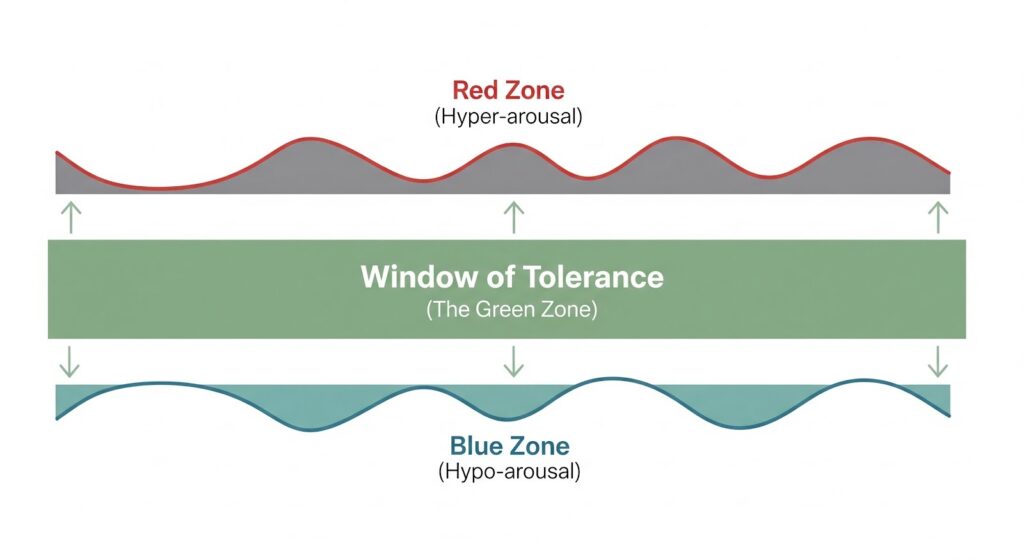
For an adult carrying trauma, the nervous system isn’t just a background process. It is the filter through which you experience every conversation, every deadline, and every relationship.
Understanding the Window of Tolerance
Trauma effectively narrows your Window of Tolerance, or what we call the Green Zone. This is the state where you feel calm, focused, and capable of handling life’s stressors.
When this window is small, it doesn’t take much to get bumped into the Red Zone (anger, panic, hypervigilance) or the Blue Zone (depression, numbness, shutdown). You might find yourself snapping at a loved one over something small or feeling so overwhelmed that you “check out” entirely.
The Story Within the Story: Why Your Body Remembers
I often see clients who describe themselves as “intellectually Green” but “physically Red.” Your neocortex (the thinking brain) knows it’s 2026, but your amygdala (the survival brain) thinks it’s still the moment of the trauma.
EMDR bridges this gap through Polyvagal regulation. It helps widen that window of tolerance, giving you more space to breathe and respond rather than react.
If you recognize these physical triggers in your own life, you don’t have to navigate them alone. Our team can help you identify your specific window of tolerance during an initial intake session.
| Nervous System State | Common Symptoms | How EMDR Shifts This |
| Red Zone | Panic, flashbacks, high anxiety, “racing” thoughts, hyper-arousal. | Desensitizes the “fight/flight” trigger by moving memories to the neocortex. |
| Yellow Zone | Stress, frustration, feeling “on edge” or overwhelmed, irritability. | Increases emotional regulation capacity, helping you stay in the “Green” longer. |
| Blue Zone | Numbness, dissociation, exhaustion, “shutting down,” hypo-arousal. | Reconnects the mind-body bond safely, gently bringing the system back online. |
| Green Zone | Calm, resilient, “in the flow,” authentic connection, social engagement. | Stabilizes this as your default “home” state by clearing historical “stuck points.” |
Understanding your “Zone” is the first step toward regulation. If you feel like you’ve been living in the Red or Blue Zones for too long, explore our specialized trauma and PTSD therapy in Kansas City to find your way back to center.
The 8 Phases of EMDR: A Step-by-Step Guide to the Process
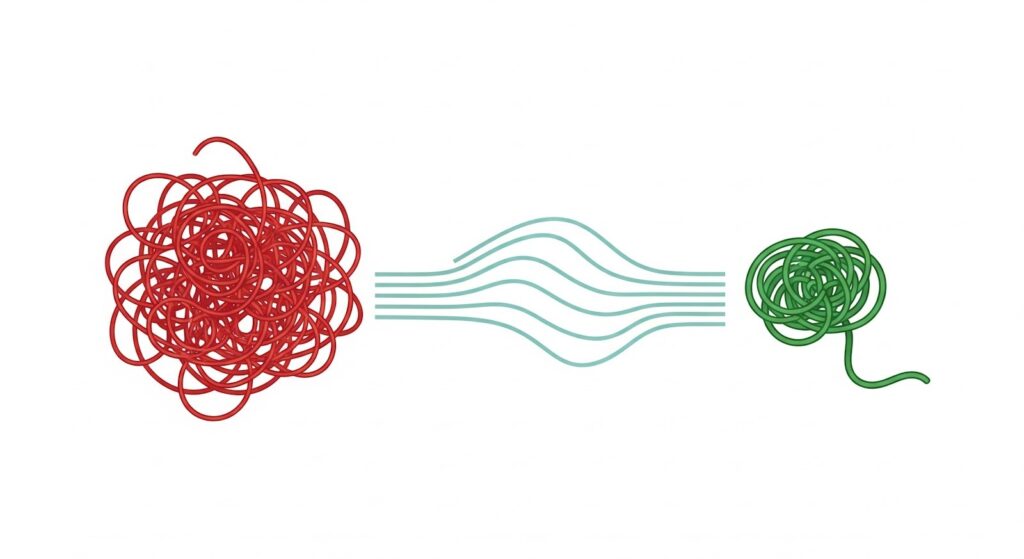
EMDR is a highly structured, evidence-based protocol recognized by the World Health Organization and the EMDRIA. In my role as a clinical supervisor, I emphasize that these phases aren’t just boxes to check; they are the scaffolding of your healing.
1 & 2. History Taking and Preparation
We start by identifying the “touchstone” memories that created the negative beliefs you carry today. We ensure you have regulation techniques to stay grounded before we ever touch the trauma.
3 & 4. Assessment and Desensitization
We target a specific memory and use bilateral stimulation—eye movements, tactile taps, or auditory tones—to reduce the distress. You aren’t “forgetting” the event; you are removing the emotional “charge” so the memory can finally settle.
5 & 6. Installation and Body Scan
Once the distress is lowered, we “install” a positive belief (e.g., “I am safe now”). We want the relief to be felt in your muscles and nervous system, not just your thoughts.
7 & 8. Closure and Reevaluation
Every session ends with you feeling stabilized and grounded. At the start of each new session, we reevaluate to ensure that the “sticky” memory no longer has a grip on you.
Neuro-Affirming Care: EMDR for Autistic and ADHD Adults
At The Wellness Counseling Center, we recognize that “healing” doesn’t look the same for every brain. Our team is trained to adapt EMDR for neurodivergent sensory processing by working with your sensory profile, not against it.
- Sensory Modifications: If eye movements feel overstimulating, we use tactile “tappers” or auditory tones.
- Validation of Neuro-Trauma: We target specific “stuck points” like social rejection or sensory overwhelm with neuro-affirming compassion.
- Integrative Support: We use our background in AutPlay® therapy to ensure the protocol respects your unique way of experiencing the world.
We believe your neurodivergence is a part of your authentic self, not something to be “fixed.” You can connect with a neuro-affirming therapist who understands your unique sensory profile.
The “Processing Hangover”: What to Expect After an EMDR Session
Because EMDR is effectively “mental yoga” for your brain, it is common to experience what I call a Processing Hangover. This isn’t a sign that something is wrong; it is a sign that your brain is doing the heavy lifting of reorganization.
Processing doesn’t stop when you walk out of my office. Your brain is like a computer running a background update. You may notice:
- Emotional Waves: Feeling more sensitive or “raw” for 24–48 hours.
- Vivid Dreams: Your brain often uses sleep to finish the “filing” process.
- Physical Fatigue: Shifting out of the Red Zone takes real energy.
Taking the first step toward reprocessing trauma is a brave decision. If you’re ready to see if our team is the right fit, you can request an EMDR consultation at any of our three regional hubs.
EMDR FAQ: Common Questions for Adults
Is EMDR like hypnosis?
No. In EMDR, you are fully awake, alert, and in control. You are at the wheel; I am simply the navigator helping you read the map.
Does EMDR work for childhood trauma?
Yes. As noted by The Trauma Research Foundation, your body remembers even what your mind cannot put into words. EMDR can process somatic sensations even without a detailed verbal narrative.
Can I do EMDR via Telehealth?
Absolutely. We use specialized secure software that provides the bilateral stimulation directly through your screen, allowing for deep healing from the comfort of your own home.
Finding Your Path Back to the Green Zone
You don’t have to keep carrying the weight of “the story within the story.” Whether you are a professional feeling the burn of anxiety and burnout or a parent trying to find your calm, there is a path forward.
Healing is an evolution toward who you were meant to be before the world got heavy. This vision is at the core of Shannon Hiser’s clinical leadership. My goal is to help you identify those “stuck points” so you can honor the true nature of your being.
Ready to find your Green Zone? Schedule a consultation with an EMDR specialist at our locations in Harrisonville, Greenwood, and Overland Park today.